Case File 01 · Shanghai

Shanghai Local Experience Pilot

#Matching#Citywalks #Food#Conversation
Guide Jony Z., Yangpu native  ·  Traveler Alex, visiting from the U.S.  ·  Duration one evening, 5:30 PM to well past 9:30

The first full test of the Goji thesis was not a cohort or a launch. It was one guide and one traveler, matched on background and interests, spending an evening in Yangpu — and everything we now believe traces back to it.

Goji Vol.1 · Field Test
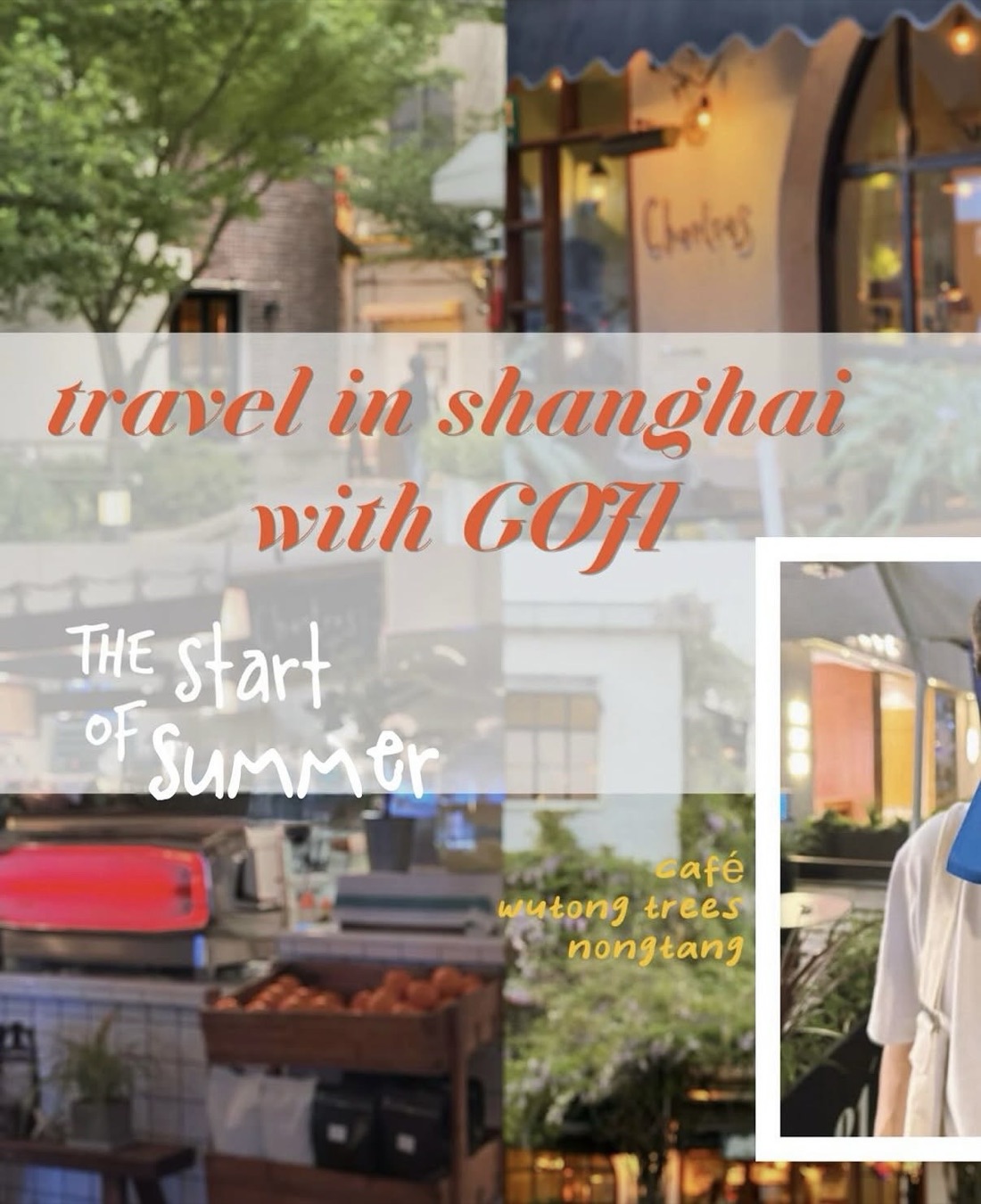
Travel in Shanghai with Goji — zine cover
the start of summer — café, wutong trees, nongtang
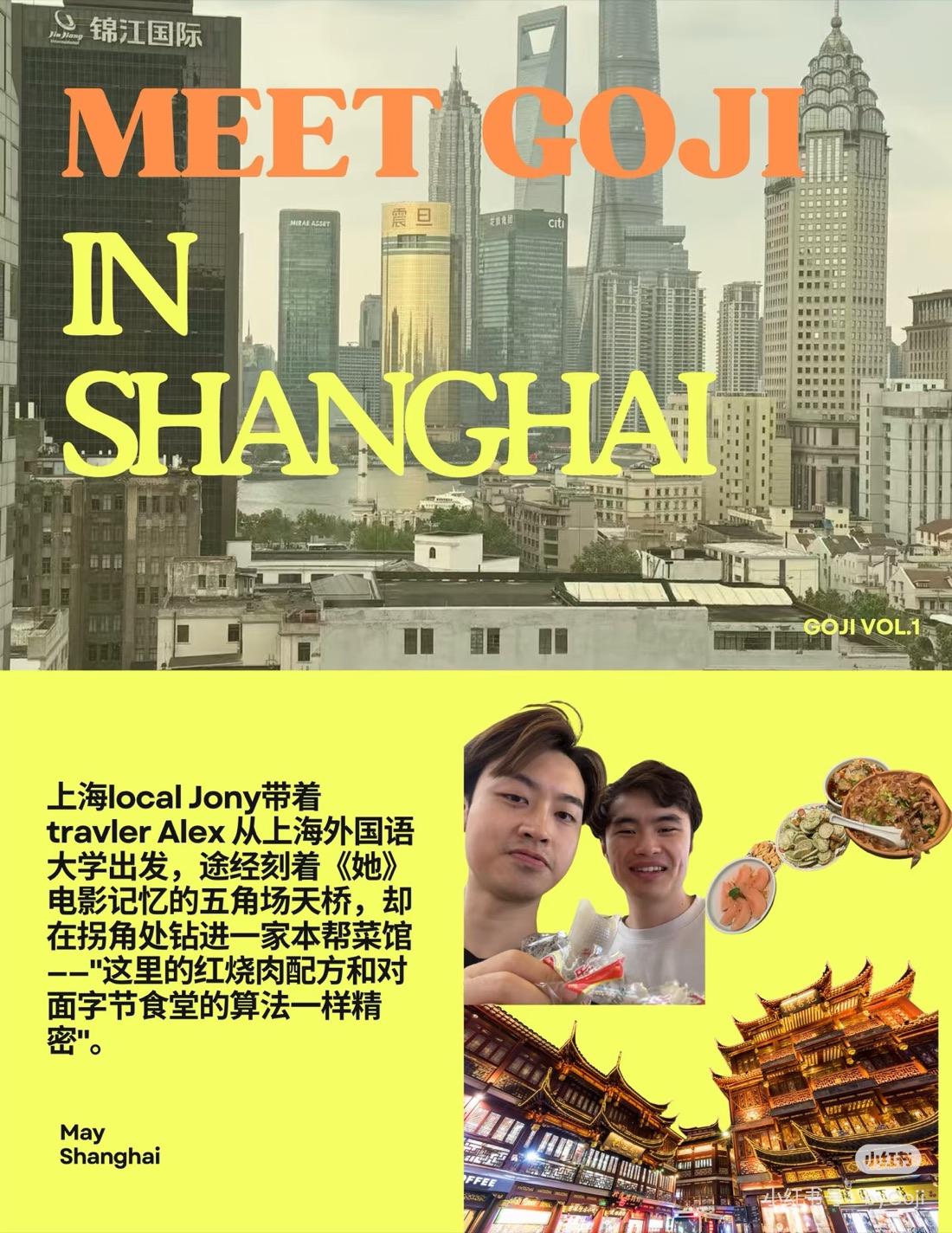
Meet Goji in Shanghai — Vol.1 poster
vol.1 — Jony × Alex, May, Shanghai
The setup

Matched before they met

Alex came to Shanghai the way most first-time visitors do — curious about the real China and carrying a list of questions about its culture, politics, and companies. Goji matched him with Jony Z.: a Yangpu native, USC-trained, teaching at an international school — sourced, like everyone in the pilot, through second-degree connections of the founding team.

Before anything was confirmed, the two had a mandatory video intro call. Alex's verdict afterward captured exactly what it was for: “the video chat was formal — but in person was natural.” The worry about meeting a stranger had been spent before the evening began.

The evening

Wujiaochang, a Ningbo dinner, and a 9:30 PM detour

They met at 5:30 PM. The metro route across town would have eaten an hour, so Jony made a host's call and drove — the first small lesson of the night: a guide who carries the logistics keeps the evening's energy for the conversation.

In Wujiaochang, Jony unpacked the district's history — a hub laid out under the Nationalist government's plan for a greater Shanghai — before dinner at a Ningbo restaurant, where sticky-rice buns and home-style dishes landed better than any landmark. Over the table, the conversation ran wherever it wanted: Nezha 2, celebrity culture, bilingual slang, Minecraft, Andrew Tate, and how young people in Chinese and American cities think more alike than either side expects.

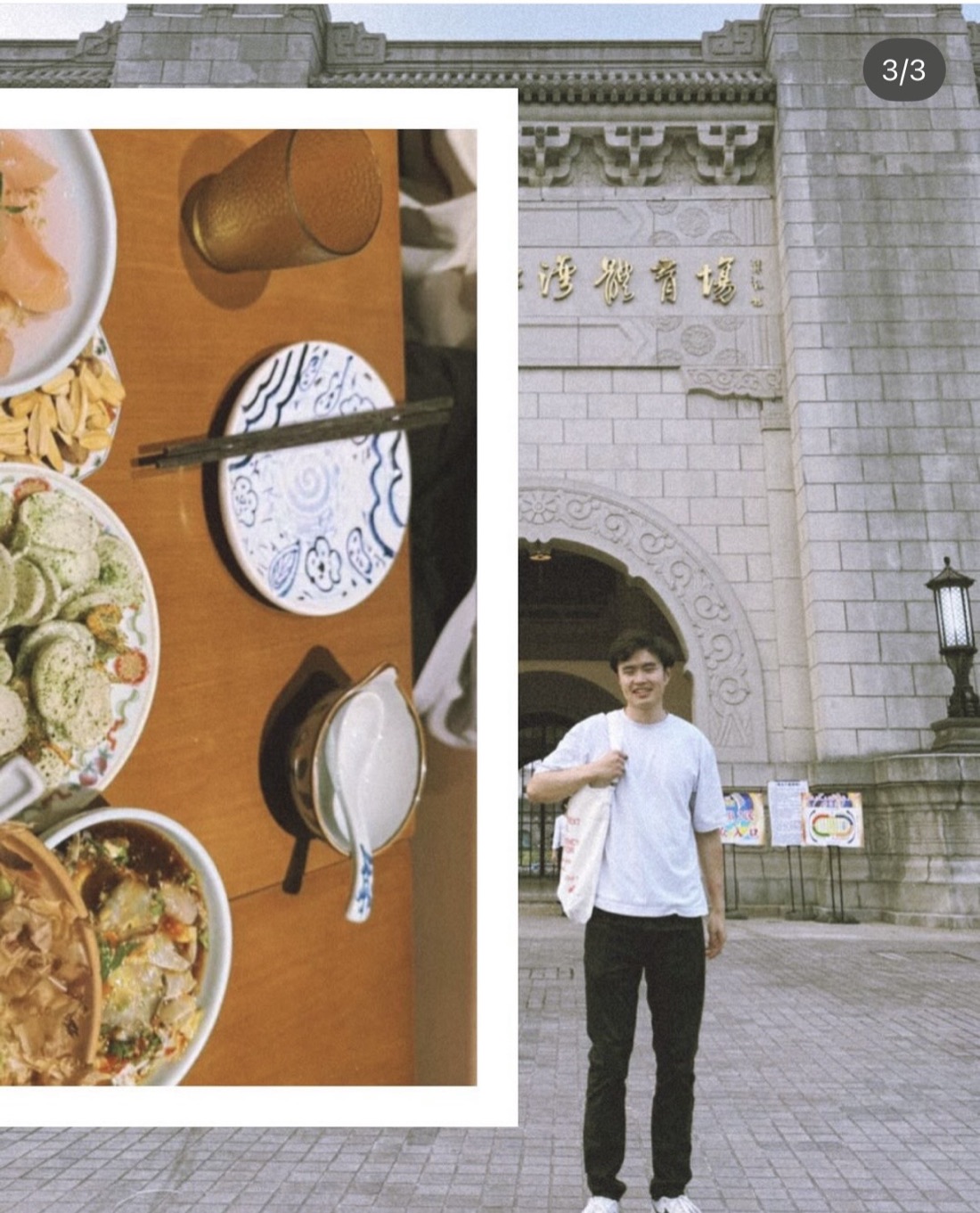
Then, past 9 PM, an unplanned finale: a swing by the ByteDance campus near Jiangwan Stadium. The lights were still on across the buildings. Alex had read about “996”; standing in front of it made it real. It became his favorite stop of the night — proof that people are most curious about the version of their own world that exists somewhere else.
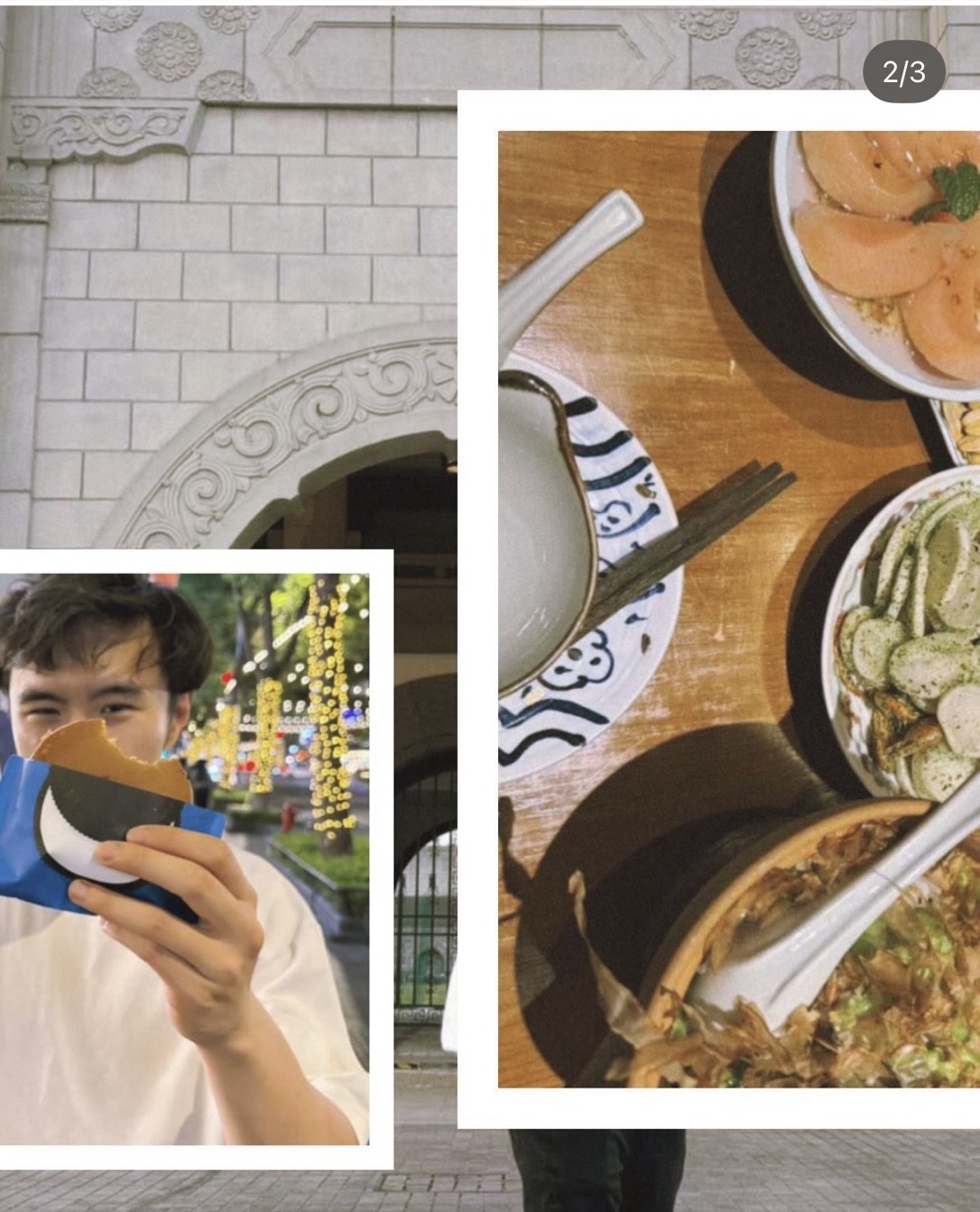
Alex with a snack at Jiangwan Stadium
Jiangwan Stadium, 1935 — snack first, history second
The Ningbo dinner table
the Ningbo table — sticky-rice buns did the diplomacy
On tape

A few minutes from the dinner table

Parts of the dinner were filmed, and the clips are the best evidence of what Goji actually sells. No itinerary in the frame — just two people at a table, letting the conversation go wherever it wants. Scroll on: they play themselves.

Clip 01 · Film

Dinner-table film criticism: Nezha 2

《哪吒 2》 — the mythological animation that stormed past every record to become the highest-grossing animated film in history, almost entirely on domestic box office.

Alex had barely heard of it; Jony had opinions. Ten minutes later they were somewhere between Chinese mythology, IMAX economics, and why the West keeps missing China's biggest cultural moments. This is the kind of context no subtitle track carries.

Clip 02 · Internet culture

“You know who's really big in China? @ishowspeed

甲亢哥 — China's nickname for IShowSpeed, the American streamer whose marathon livestreams across Chinese cities went viral on both sides of the Pacific and did more for street-level China content than a decade of tourism ads.

Guide and traveler compared celebrity culture across the two internets — who translates, who doesn't, and why the same clip reads completely differently in each feed.

A practical note came out of filming, too: a phone on the table can't capture audio and stay out of the way at once. Future gatherings will record with wearable or hands-free cameras, so the record never competes with the conversation.

Social dynamic trumped itinerary. Too much touristic stuff would only have distracted from the conversation.

What we learned

The person is the product

Asked for his favorite moment, Alex didn't name a place. He named the dinner, and the human element. His advice for how Goji should describe itself: “frame it as meeting up with a friend — meeting a local.” And the friend he'd recommend it to: someone who is into people, someone who loves slice-of-life.

Guides go first. Our prepared question list read too much like a first date. Between two people who've just met — especially two guys — conversation flows when the host opens up with his own stories and takes first, not when it interrogates. That principle now anchors guide onboarding.

Match the topics, not just the people. Alex's questions — international education, corporate culture, how companies work — happened to be exactly Jony's ground. Next time that's not luck: travelers share what they're curious about before the meetup, so the guide can prepare.

Price the route, not the clock. The evening was scoped at three hours and ran past four — happily, on both sides. Jony waved the overtime and proposed the better model himself: a guide should price the route as an experience, with overflow expected, rather than metering the minutes.